Deck Builder in San Angelo, TX
Most of San Angelo is flat enough that a deck is a choice rather than a necessity. Where the ground falls away, it is the only sensible answer.
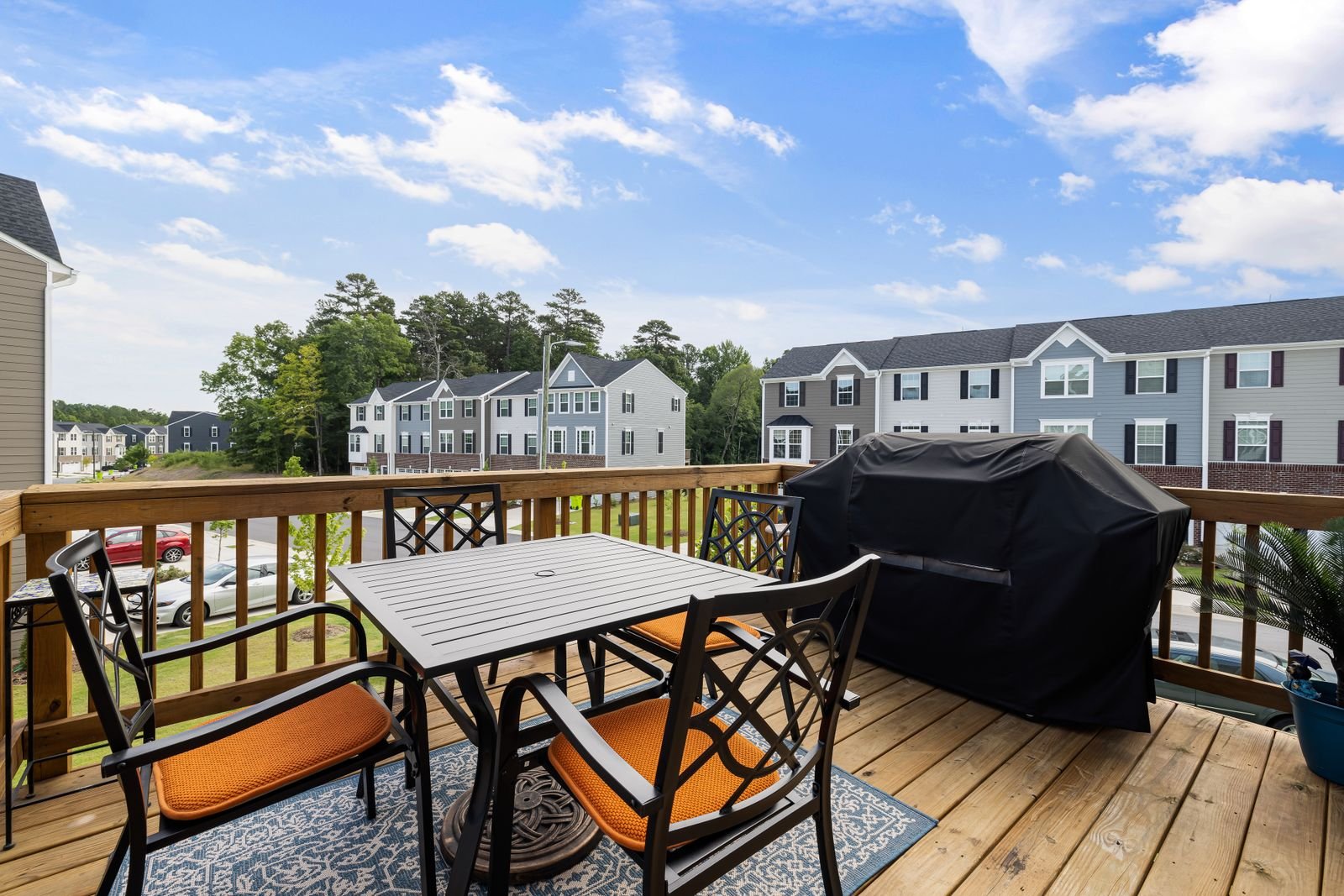 Deck · illustrative
Decking material is the decision people agonise over and the one that matters least.
What decides whether a deck lasts is the ledger connection, the footings and the drainage behind the ledger. Those are invisible when finished, which is exactly why they get value-engineered.
Material choice is real but secondary, and here it is mostly about heat. Composite gets hot in direct sun, and San Angelo runs around 244 days of sun a year with roughly 30 of them over 100 degrees. A dark composite board on an unshaded south-facing deck is uncomfortable underfoot in a way the brochure does not mention.
Where the lot slopes, near the river bends or on the ground that falls toward the draws, a deck solves a levelling problem that concrete would solve expensively.
What we actually do
The ledger
Flashed and attached to structure, which is where deck failures start.
The footings
Sized for clay that moves seasonally.
The material
Chosen for how hot it gets underfoot, not just how it looks.
Worth deciding early
These are the choices that are cheap now and expensive later.
- Whether the deck will be shaded. On an unshaded south exposure, material choice stops being cosmetic.
- Whether a concrete patio would serve better on flat ground, which for much of San Angelo it would.
- Where water goes behind the ledger, because that is where rot begins.
Cost figures on this page are planning ranges for San Angelo, installed. They are not a quote, and code references are general guidance rather than a determination for your property. Confirm current requirements with the City on (325) 657-4210.
Things people ask before they start
Should I build a deck or a concrete patio?
On flat ground a patio is usually the better value. A deck earns its cost where the ground falls away and levelling would otherwise mean fill or a retaining wall.
Does composite get too hot here?
It gets hot. With about 244 sunny days and 30 days over 100 degrees, a dark board on an unshaded south-facing deck can be unpleasant barefoot. Lighter colours and shade both help.
Does a deck need a permit?
Past 200 square feet it does, and elevated decks bring guard and stair requirements with them. Check with Permits & Inspections on (325) 657-4210.
What does a deck cost?
Planning ranges run roughly $28 to $60 per square foot installed, with material and elevation moving it most.
How long does a deck take?
Less than people expect once footings have cured. The permit and the weather usually control the schedule more than the carpentry does.
Other things we build
Patio Covers
An attached cover is the most common thing we build and the one most often undersized. The span, the wall it lands on.
$22 to $48 per sq ft →02Covered Patios
A covered patio is framed and roofed like part of the house rather than bolted onto it. It costs more than a metal.
$38 to $70 per sq ft →03Carports & RV Covers
In a town that averages two days a year of hail over an inch, a carport is not a luxury item. It is the cheapest square.
$16 to $34 per sq ft →04Pergolas
A pergola is the honest option when you want to break the sun without closing the sky. It will not keep you dry, and.
$28 to $60 per sq ft →Want a number for your property?
Send the address and roughly what you are picturing. We come back with a range and the permit path for that specific lot.